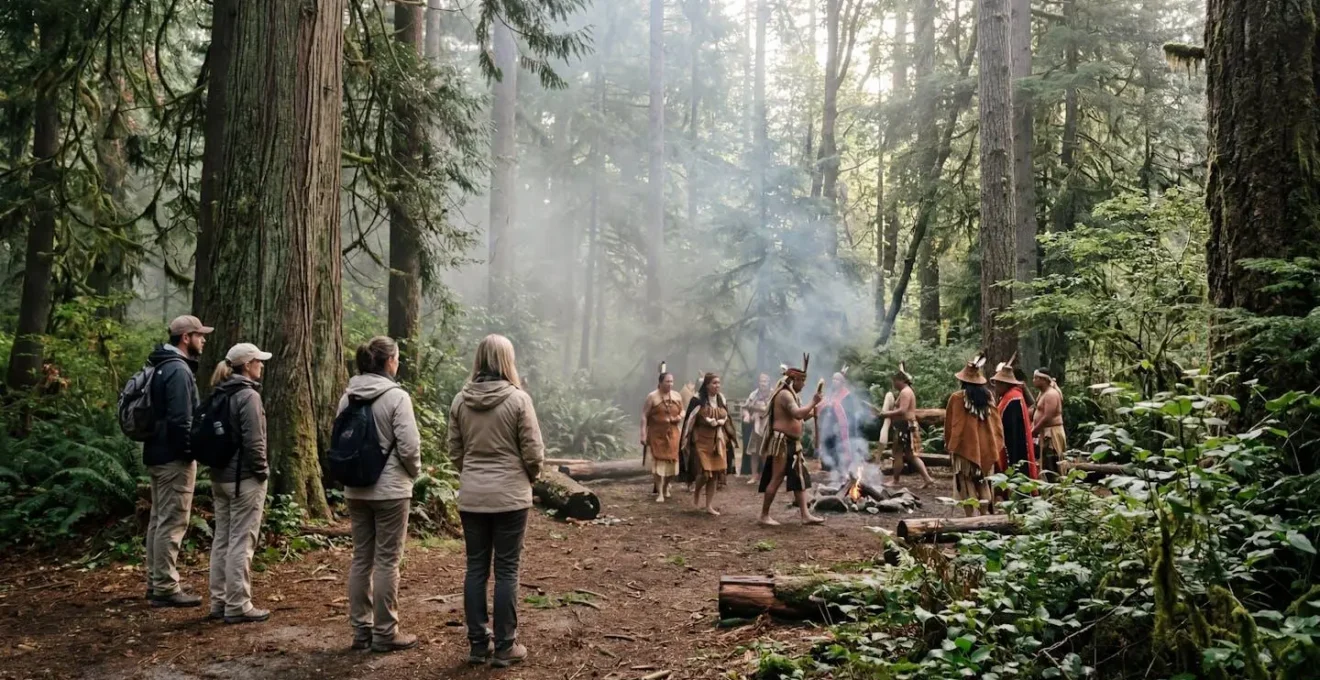
True respect for Indigenous cultures isn’t about mere politeness; it’s about actively recognising their sovereignty and agency in every interaction.
- This means prioritising community-led enterprises over foreign agencies to ensure economic benefits flow directly back to the people whose land you are visiting.
- It also involves understanding that consent is an ongoing, revocable process—especially concerning photography and sacred rituals—not a one-time transaction.
Recommendation: Before you book, shift your mindset from “what can I get from this experience?” to “how can my presence genuinely support this community’s self-determination and cultural integrity?”
For the anthropologically-minded traveller, the desire to connect with cultures different from one’s own is a powerful driver. Yet, this desire walks a fine line. On one side lies authentic, reciprocal exchange; on the other, the uncomfortable reality of treating communities like living museum exhibits. Mainstream travel advice often offers simple platitudes: “ask before you take a photo,” “buy local crafts,” “respect the culture.” While well-intentioned, this advice barely scratches the surface and fails to address the underlying power dynamics at play.
The risk is inadvertently participating in a system that commodifies culture, extracts value, and leaves communities no better off. But what if the key to respectful engagement wasn’t just about individual politeness, but about making conscious, structural choices? What if true respect lies not in what you say, but in the systems you choose to support with your time and money? This is the principle of structural respect—an approach that de-centres the tourist’s desires and instead prioritises the agency, sovereignty, and economic self-determination of the Indigenous community.
This guide moves beyond simple etiquette to provide a framework for ethical engagement. We will explore the deep meaning of consent, the critical difference between community-led and foreign-operated tourism, the unseen boundaries of sacred lands, and how your choices can either reinforce colonial-era exploitation or foster genuine, empowering partnerships. It’s about learning to be a better guest, not just a better tourist.
To navigate this complex but rewarding landscape, this article provides a clear roadmap. We will deconstruct the common pitfalls and offer actionable strategies for ensuring your journey is one of true reciprocity and respect, from start to finish.
Summary: A Framework for Ethical Engagement with Indigenous Peoples
- Why Photographing Tribal Elders Without Permission Breaches Local Trust?
- How to Ask for Informed Consent Before Participating in Sacred Rituals?
- Community-Led Tours vs Foreign Agencies: Who Really Gets Your Money?
- The Sacred Land Trespassing Mistake That Leads to Immediate Fines
- How to Adjust Your Body Language to Show Instant Respect?
- The Volunteering Trap That Exploits Vulnerable Communities
- How to Identify a Responsible Wildlife Tour in Southeast Asia?
- How to Support Authentic Cultural Heritage Sites Without Funding Tourist Traps?
Why Photographing Tribal Elders Without Permission Breaches Local Trust?
The well-worn advice to “ask before you shoot” is the first step, but it often misses the profound cultural context behind the request. For many travellers, a photograph is a fleeting digital souvenir. For many Indigenous peoples, however, an image is not a simple picture. It can carry immense spiritual weight, be intrinsically linked to beliefs about the soul, or represent a form of ownership within the community. Taking a photograph without explicit, informed permission isn’t just rude; it can be perceived as a deep violation of personal and cultural sovereignty.
This is particularly sensitive when it involves elders, who are often the revered keepers of tradition, history, and spiritual knowledge. An unsolicited photo can feel extractive, reducing a respected individual to an exotic object for a foreign gaze. As one analysis on the subject highlights, a photo taken without permission can be more than discourteous; it can be a direct violation of cultural or spiritual values. The act reinforces a power imbalance where the tourist’s desire for a memento is prioritised over the subject’s fundamental right to control their own image and narrative.
True respect involves shifting the dynamic from a transaction to a conversation. It means being prepared for “no” as a valid answer and accepting it gracefully without pressure. It also means showing the person the image you’ve taken, offering to delete it if they are not comfortable, and never using it for commercial purposes without a separate, clear agreement. This approach transforms the camera from a tool of extraction into a bridge for connection, built on a foundation of mutual trust and respect for personal agency.
How to Ask for Informed Consent Before Participating in Sacred Rituals?
Participating in a sacred ritual is a profound privilege, not a tourist activity. The concept of consent in this context goes far beyond a simple “yes” or “no.” It requires what is known as Free, Prior, and Informed Consent (FPIC), a principle central to international human rights law concerning Indigenous peoples. It means that consent must be given freely, without coercion or pressure; sought in advance of any activity; and based on a complete and honest understanding of what is being asked.
Merely being present as an observer can alter the dynamics of a ceremony, so your participation, even passive, must be explicitly approved. This often involves more than asking a single individual. In many cultures, the authority to grant such permission rests not with one person but with a council of elders or the community as a whole. Your first question should not be “Can I join?” but rather, “Who should I speak with to ask for permission?” This demonstrates an immediate understanding and respect for their social structures and governance.
For professional photographers or journalists, the ethical bar is even higher. As the Visit Natives Tourism Guidelines explain, this requires complete transparency and fair compensation:
Ethical photography also means that if you are a professional creating material for commercial use, you must compensate the people being photographed and clearly explain where the photos will appear and for what purpose. Remember that not everyone is literate or familiar with written consent forms, so agreements must be explained verbally and understood by all parties.
– Visit Natives Tourism Guidelines, How to Visit Indigenous Communities Respectfully
Your Action Plan: The Four Pillars of True Consent
- Comprehension: Clearly explain what you are asking to do, why you want to do it, and what the potential impact of your presence might be. Use simple language and work with a trusted local interpreter if necessary to overcome language barriers.
- Voluntariness: Critically assess whether your request places any social or economic pressure on the community. If there is a power imbalance (e.g., you are paying for a tour), be extra cautious that their “yes” is not coerced by financial need.
- Authority: Verify if the person you are asking has the legitimate authority to grant permission. Ask respectfully if a community council or specific elder needs to be consulted for sacred matters.
- Revocability: Explicitly communicate that you understand their consent can be withdrawn at any point, for any reason, without explanation. If they ask you to stop, leave, or delete a photo, you must do so immediately and respectfully.
Community-Led Tours vs Foreign Agencies: Who Really Gets Your Money?
One of the most impactful choices a traveller can make is deciding where their money goes. The distinction between a community-led tour and one run by an external or foreign agency is not just a detail—it is the cornerstone of economic decolonisation in tourism. When you book with a 100% Indigenous-owned and operated enterprise, you are not just buying an experience; you are investing in a community’s self-determination, cultural preservation, and economic sovereignty. This choice directly contributes to building sustainable local economies. For example, a report highlights that in one country alone, Indigenous tourism in Canada supports nearly 2,000 businesses and over 39,000 jobs.
Conversely, many international tour agencies employ a model where local people are used as the “face” of the tour, while the ownership, management, and—most importantly—the profits remain in foreign hands. In these scenarios, only a tiny fraction of the tour’s cost trickles down to the community, often in the form of low-wage, entry-level jobs. This creates a cycle of dependency and can lead to the staging of “authentic” experiences that are little more than performances tailored to tourist expectations.
The following table breaks down the fundamental differences, highlighting why choosing a community-led model is a critical act of structural respect.
| Aspect | Community-Led Tourism | Foreign Agency Tourism |
|---|---|---|
| Business Ownership | 100% Indigenous owned | Often foreign owned with local faces |
| Revenue Distribution | 80-100% stays in community | 10-30% reaches local community |
| Decision Making | Community councils decide | External management decides |
| Cultural Authenticity | Genuine, evolving traditions | Often staged performances |
| Employment Quality | Management & guide roles for locals | Entry-level roles only |
Making the right choice requires research. Look for businesses that explicitly state their Indigenous ownership. Check if they are part of a recognised Indigenous tourism association. By voting with your wallet, you actively support models that empower communities rather than exploit them.
The Sacred Land Trespassing Mistake That Leads to Immediate Fines
For Indigenous peoples, land is not merely a resource to be owned or a landscape to be admired; it is a living entity imbued with history, spirituality, and identity. Boundaries are not always marked by fences or signs. They can be defined by a story, a songline, a seasonal ceremony, or the resting place of an ancestor. Trespassing onto sacred land is therefore not just a legal infraction; it is a profound act of desecration that can cause deep spiritual and communal harm. This is why many Indigenous nations have established their own laws and protocols, which can result in immediate fines or expulsion for violators.
The United Nations has affirmed the rights of Indigenous peoples to control access to and use of their cultural and spiritual property. This includes land. A key UN declaration emphasizes that states must provide effective mechanisms for redress when this property is misappropriated. Furthermore, it asserts that before any tourism activities are decided, the impacted peoples must be meaningfully consulted and their free, prior and informed consent must be obtained. As a visitor, you are morally and often legally bound by these principles.
The most crucial step to avoid this mistake is to always travel with an authorised Indigenous guide. They are the only ones who can navigate both the visible and invisible boundaries of their territory. Never assume an area is open to the public just because it’s not physically blocked. Additionally, a critical modern-day error is geotagging photos on social media. This can inadvertently lead crowds of uninformed tourists to sensitive or sacred locations, causing irreversible damage. Respect means not only following the rules but also actively protecting the community’s privacy and sovereignty by keeping sacred locations off the digital map.
How to Adjust Your Body Language to Show Instant Respect?
Cross-cultural communication is more than 80% non-verbal. The way you stand, the eye contact you make, and the space you keep can convey respect or disrespect long before you say a word. In many Western cultures, direct eye contact, a firm handshake, and confidently filling conversational silence are signs of sincerity and engagement. In many Indigenous cultures, these same actions can be interpreted as aggressive, challenging, or rude.
When interacting with elders, for instance, slightly averting your gaze is often a sign of deference and respect, whereas sustained, direct eye contact can be seen as a challenge to their authority. Similarly, a handshake should be gentle, mirroring the pressure offered by the other person. It’s best to wait for them to initiate any physical contact. Personal space is also highly valued; allow for a greater physical distance than you might be used to, particularly when interacting across different genders or generations. One of the most powerful adjustments you can make is to embrace silence. Silence is often a valued part of communication, a space for thought and reflection. Feeling the need to fill every pause with chatter can come across as nervous and disrespectful.
Ultimately, the guiding principle is humility. You are a guest in someone else’s home and culture. As one traveller thoughtfully puts it, this requires a fundamental shift in entitlement:
Ask permission if you are not sure: permission to take photos, permission to pick up a toddler, permission to enter an area of the village. Don’t assume you are entitled to anything… We need to remember that we are just guests passing through someone else’s home, and that should be greatly respected.
– Erin Outdoors, The Ethics of Travel Photography
Observing how people within the community interact with each other is your best guide. Watch, listen, and adapt. Your willingness to adjust your own cultural norms is one of the most immediate and sincere ways to demonstrate respect.
The Volunteering Trap That Exploits Vulnerable Communities
The desire to “give back” while travelling is a noble one, but it has fueled a multi-billion dollar industry known as “voluntourism” that often does more harm than good. The core problem is that many programs are designed for the experience of the volunteer, not the needs of the community. This creates a dangerous dynamic where vulnerable communities, including Indigenous ones, can become props in a traveller’s personal growth narrative. While overall tourism may be recovering post-pandemic, reports from agencies like Statistics Canada show that Indigenous tourism revenues have yet to recover to pre-pandemic levels, highlighting their ongoing economic vulnerability that voluntourism can exploit.
One of the most common pitfalls is the skill-mismatch trap. Well-meaning but unqualified volunteers are flown in to perform tasks like building a school or teaching English. This can take jobs away from skilled local labourers, undermine local professionals, and often results in substandard work that the community must later fix. It creates a harmful cycle of dependency, teaching a community that solutions come from outside rather than building their own capacity. An ethical alternative focuses on genuine, long-term skill transfer, where a volunteer with specific, requested expertise works under local supervision to train community members.
Case Study: The Problem of Unskilled Voluntourism
Organizations like Projects Abroad now emphasize that ethical volunteering requires a true needs assessment. They stress that volunteers must possess relevant skills and qualifications that are specifically requested by the host community and must work under the direction of local leaders. For example, sending a gap-year student with no teaching experience to run a classroom can disrupt the local education system and devalue trained local teachers. Conversely, a qualified engineer who spends months training local workers on a new water-purification system, and then leaves the project in their hands, is engaging in a model of empowerment, not dependency.
Before signing up for any volunteer opportunity, ask critical questions: Was this project initiated and requested by the community? Are my skills genuinely needed, or am I taking a job from a local person? Where does my money actually go? Often, a more ethical and effective way to “help” is to simply support community-owned businesses, paying a fair price for their goods and services, which empowers them to hire and build from within.
How to Identify a Responsible Wildlife Tour in Southeast Asia?
Wildlife tourism, particularly in biodiverse regions like Southeast Asia, presents a complex ethical challenge. The allure of close encounters with iconic species can fuel operations that exploit both animals and local Indigenous communities whose ancestral lands are home to this wildlife. A responsible tour is one that places conservation and community benefit on equal footing with the tourist experience. It is a model rooted in respect for the animals’ autonomy and the community’s land rights.
The first indicator of a responsible operator is a strict “no-contact” policy. Any tour that allows you to ride, bathe, hold, or directly feed a wild animal is almost certainly unethical and causing harm. True sanctuaries and responsible guides prioritise the animals’ welfare, maintaining a respectful distance and educating visitors on natural behaviours. They contribute to conservation through data collection, anti-poaching patrols, and habitat restoration, not through creating photo opportunities.
Crucially, the most ethical models are often those run by or in direct partnership with the local Indigenous communities who have been the traditional custodians of these lands for generations. These tours integrate traditional ecological knowledge with modern conservation science. They ensure that tourism revenue directly funds not only wildlife protection but also community development, such as schools, healthcare, and cultural revitalisation projects. As Indigenous Tourism BC describes a best-practice model:
Spirit Bear Lodge showcases the natural splendour of the Great Bear Rainforest while protecting it for future generations through a conservation-based tourism model rooted in respect and connection… from local employment, food stability, and language revitalization for the community to coastal clean-ups, marine research, and composting and recycling.
– Indigenous Tourism BC, Living with the Land: Travelling with Reciprocity and Respect
When researching tours, look for this holistic approach. Check if the company has transparent conservation and community-benefit policies. Prioritise operators who employ local Indigenous guides and actively involve the community in decision-making. This ensures your visit supports the long-term well-being of both the wildlife and its ancestral guardians.
Key Takeaways
- Follow the Money: The single most impactful choice is to patronise 100% Indigenous-owned businesses. This ensures revenue directly supports community self-determination.
- Consent is a Dialogue: Treat consent not as a one-time question but as an ongoing, revocable process built on trust, especially for photography and sacred rituals.
- Respect Invisible Boundaries: Always travel with an authorised local guide to navigate both physical and spiritual land boundaries, and never geotag photos of sensitive areas.
How to Support Authentic Cultural Heritage Sites Without Funding Tourist Traps?
Your journey as an ethical traveller culminates in this crucial ability: distinguishing between a living, breathing cultural heritage site and a hollowed-out tourist trap. The former empowers a community to share its story on its own terms, while the latter reduces their culture to a commercial performance. The stakes are high; the World Travel & Tourism Council reports Indigenous tourism is projected to contribute $67BN USD to the global economy by 2034. The question is, who will benefit from this growth?
An authentic site feels like a living place because it is. Ceremonies may still be held there (to which you may or may not be invited), stories are told by community elders rather than scripted guides, and traditions are shown as they are today—evolving and adapting, not frozen in a romanticised past. The revenue from these sites flows into community-managed funds that support tangible projects like language schools or infrastructure. In a tourist trap, the dynamic is reversed. “Artisans” may be low-wage employees performing a role, the site itself is a static display, and the profits are siphoned off by external operators.
Recognising the difference requires observation and asking the right questions. Who owns this place? Who is telling the stories? Where does the money from my ticket go? The following comparison offers a guide to identifying the key indicators.
| Aspect | Living Heritage Site | Tourist Trap |
|---|---|---|
| Artisans | Part of ancestral lineage | Employed performers |
| Stories | Told by community elders | Scripted tour guides |
| Site Use | Active community ceremonies | Frozen in time displays |
| Revenue Flow | Community-managed funds | External operators profit |
| Cultural Evolution | Traditions naturally evolving | Static representations |
Supporting living heritage is the ultimate expression of structural respect. It validates a community’s right to control its own narrative and ensures that tourism acts as a force for cultural continuity and empowerment, not erasure.
The next step in your journey as an ethical traveller is to embed this framework of structural respect into your planning. Before you book your next trip, ask not just “where am I going?” but also “who benefits from my presence?” Your answers will guide you toward a more meaningful, just, and genuinely respectful engagement with the world.
Frequently Asked Questions about Respectful Engagement
Should I maintain direct eye contact with Indigenous elders?
In many Indigenous cultures, averting gaze slightly shows respect, especially with elders. Direct sustained eye contact can be seen as aggressive or challenging.
How should I approach physical greetings?
Use a softer handshake than typical Western business greetings. Wait for the other person to initiate physical contact and mirror their approach.
What about personal space and silence?
Allow more physical distance than usual, especially across genders and generations. Embrace silence as valued communication, not an awkward void to fill.