The secret to overcoming acute culture shock is counter-intuitive: stop trying to immediately ’embrace the chaos’ and instead, strategically build a ‘psychological fortress’ to manage your mental energy.
- Sensory overload is a physiological reality, not a personal failure. Your brain is simply overwhelmed, and it can be controlled with specific breathing techniques.
- Creating a bubble of familiarity through a grounding morning routine provides the stability needed to explore an unpredictable environment without burnout.
Recommendation: Reframe your hotel or accommodation not as a barrier to authentic experiences, but as a vital ‘safe base’ that enables, rather than prevents, adventurous and stress-free outings.
The aircraft door opens, and it hits you: a wall of humid air, a cacophony of languages you don’t understand, and the distant but unmistakable smell of a city that never sleeps. For a first-time long-haul traveller from the UK landing in a chaotic Asian metropolis, this moment is a cocktail of excitement and pure, unfiltered terror. You’ve been told to “be open-minded,” “embrace the new,” and “dive right in.” But what happens when diving in feels like drowning?
The initial hours in a radically different environment can trigger an acute form of culture shock, a state of sensory and cognitive overload that standard travel advice often fails to address. This isn’t about long-term homesickness; it’s a short-term crisis of the nervous system. The usual tips—learning a few phrases or trying local food—are excellent for gradual adaptation but are utterly useless when you’re frozen with anxiety on a crowded street corner, unable to make a simple decision.
But what if the key to conquering this intense, 48-hour shock wasn’t to force yourself further out of your comfort zone, but to strategically retreat into it? As a psychological resilience coach, I’ve seen that the most effective way to thrive in a foreign environment is not to fight the feeling of being overwhelmed, but to manage your cognitive load. It’s about building a ‘psychological fortress’—a portable sanctuary of control and familiarity—that allows you to engage with the chaos on your own terms.
This guide will not tell you to simply “push through.” Instead, it will provide you with tactical, evidence-based strategies to regain control of your mental state, navigate the complexities of a new city, and transform yourself from a vulnerable tourist into a resilient explorer, all within your first two days.
Summary: A Resilience Coach’s Guide to Conquering Acute Culture Shock
- Why Sensory Overload in Asian Markets Triggers Extreme Travel Anxiety?
- How to Establish a Grounding Morning Routine in a Chaotic City?
- Guided Acclimatisation Tours vs Solo Wandering: Which Is Less Stressful?
- The Street Navigation Error That Flags You as a Vulnerable Tourist
- How to Quickly Overcome the Language Barrier for Basic Needs?
- Why Large Hotel Chains Isolate You From Authentic Local Life?
- Why Changing Hostels Every 3 Days Destroys Your Mental Wellbeing?
- The Reality for International Travelers: Curing Travel Burnout After 6 Months
Why Sensory Overload in Asian Markets Triggers Extreme Travel Anxiety?
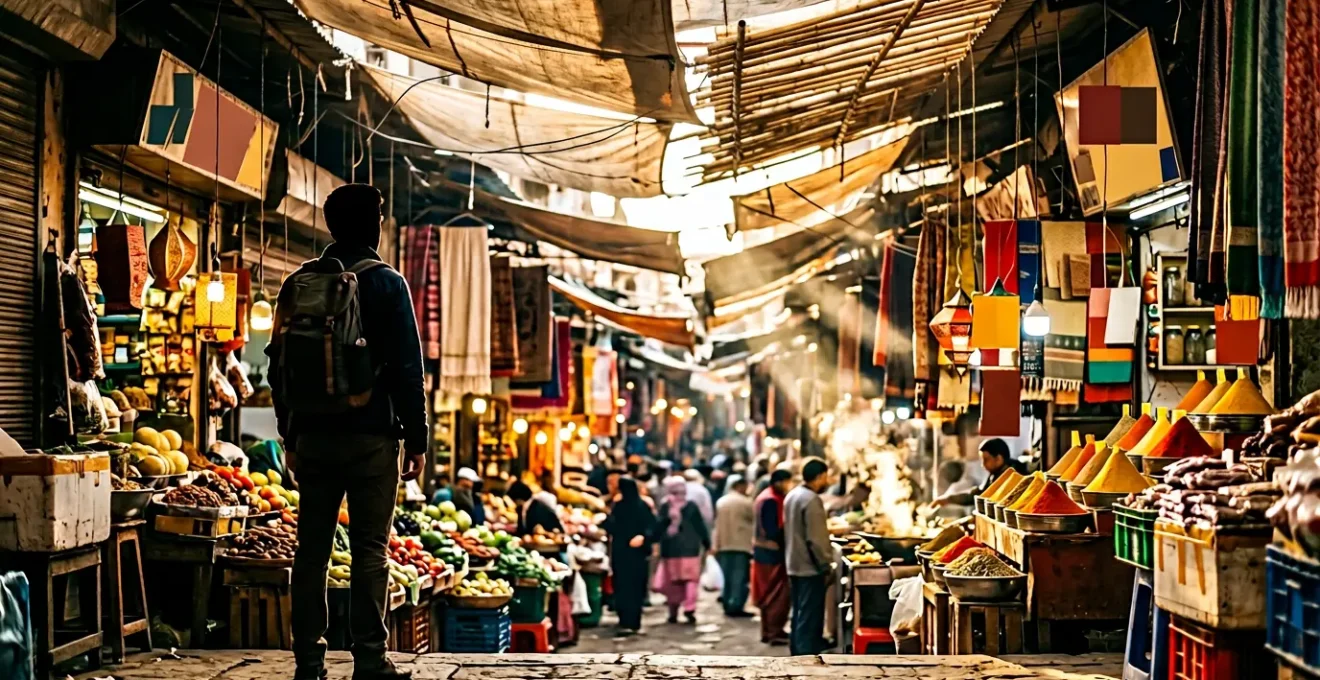
The feeling of panic that grips you in a bustling Asian market isn’t a character flaw; it’s a biological response. Your brain is a processing unit with a finite capacity. When it’s bombarded with an overwhelming volume of novel sensory input—the roar of motorbikes, thousands of unfamiliar faces, the pungent mix of spices and exhaust fumes, the vibrant assault of colours—it enters a state of sensory overload. This triggers the amygdala, the brain’s alarm system, initiating a ‘fight-or-flight’ response. Your heart races, your breathing becomes shallow, and your ability to think rationally plummets. This is not just “stress”; it’s a physiological state of high alert.
Research on sensory processing shows that environments like busy markets are inherently disorienting for many people. Your brain is desperately trying to create patterns and predict what comes next, but in a chaotic, unfamiliar setting, it can’t. This predictive failure is exhausting and leads to a state of high anxiety. The key isn’t to “toughen up” but to have a tool that can manually override this panicked physiological response. One of the most effective and discreet tools is a technique known as the ‘physiological sigh’.
Your Action Plan: The Physiological Sigh Technique for Instant Calm
- Take a double inhale through the nose – first a deep breath, then a second smaller ‘sip’ of air on top.
- Hold for 1-2 seconds to maximize oxygen intake.
- Exhale slowly and completely through the mouth for 6-8 seconds.
- Repeat 2-3 times to activate the vagus nerve and reduce fight-or-flight response.
- Practice discreetly even in crowded spaces by turning away or covering with a hand gesture.
Mastering this simple breathing exercise gives you a powerful, immediate way to tell your nervous system that you are safe, even when your surroundings feel anything but. It’s the first brick in your psychological fortress.
How to Establish a Grounding Morning Routine in a Chaotic City?
Your first morning in a new, chaotic city sets the tone for the entire day. Waking up and immediately exposing yourself to the unpredictable environment is a recipe for depleting your mental energy before you’ve even had breakfast. The most resilient travellers don’t leave their mental state to chance; they engineer it. The solution is to create a grounding morning routine—a 20-45 minute non-negotiable ritual that provides a predictable start to an unpredictable day.
This routine acts as a ‘sensory anchor’, connecting you to a state of calm and control. It’s not about complex workouts or productivity hacks. It’s about familiarity. This could be brewing a specific type of tea you brought from home, listening to the same calming playlist, or writing in a journal for ten minutes. These actions are predictable, require no decision-making, and create a tranquil bubble before the sensory onslaught of the day begins. This small island of stability is your ‘safe base’ from which you can launch your explorations.
As you can see, the power lies in the tactile and familiar. The warmth of the cup, the familiar scent of the tea, the texture of your own journal—these sensory inputs are the antidote to the overwhelming novelty outside. This isn’t a waste of precious travel time; it’s a strategic investment in your mental well-being for the day ahead. The type of routine can even be adapted to your travel style.
| Travel Style | Routine Duration | Key Elements | Success Rate |
|---|---|---|---|
| Backpacker/Hostel | 15-20 minutes | Portable items, quick meditation, journaling | 65% |
| Hotel/Airbnb | 30-45 minutes | Full breakfast, exercise, planning session | 82% |
| Digital Nomad | 45-60 minutes | Workout, work prep, local café visit | 78% |
Guided Acclimatisation Tours vs Solo Wandering: Which Is Less Stressful?
Assess Your ‘Cognitive Load’: Frame the choice not as a simple binary, but as a strategic management of mental energy.
– Dr. Emily Browning, Ready to Travel Again? How to Cope with Culture Shock
The romantic ideal of the solo traveller involves getting lost in winding alleyways and discovering hidden gems. The reality, for someone in the throes of culture shock, is often decision fatigue, anxiety, and a feeling of being dangerously adrift. The choice between a guided tour and solo wandering on your first day isn’t about authenticity; it’s a strategic decision about managing your cognitive load. A guided tour outsources a huge mental burden: navigation, language, safety, and decision-making. It acts as ‘scaffolding’, allowing you to observe the city’s patterns—how traffic flows, how people interact, how the metro works—from a position of safety.
For your first 24-48 hours, a short, focused acclimatisation tour (like a food tour or a neighbourhood walk) is almost always the less stressful option. It’s not about seeing all the top sights; it’s about learning the *system* of the city. This structured experience gives you the confidence and foundational knowledge to wander solo on day three. Thinking of it this way removes the guilt of not being “adventurous” enough. You’re not a passive tourist; you’re a strategist gathering intelligence for future missions.
The goal is to reduce the time spent in the acute ‘frustration’ phase of culture shock. With the right strategies, this period of intense stress can be significantly shortened. In fact, most travelers recover from culture shock within 3-7 days when they proactively manage their acclimatisation. A guided introduction is a powerful tool to accelerate that process, turning bewilderment into familiarity much faster.
The Street Navigation Error That Flags You as a Vulnerable Tourist
There’s a single, unconscious action that instantly flags you as a lost, vulnerable tourist: stopping dead in the middle of a crowded pavement to check your phone or a map. This abrupt halt disrupts the human traffic flow, marking you as an outsider and, potentially, an easy target. Confident, purposeful movement—even when you’re completely lost—is a form of urban camouflage. The key is to master the ‘Drift and Dock’ technique, a method of navigating that preserves your safety and reduces the anxiety of feeling exposed.
Instead of a sudden stop, you begin the ‘drift’ by gradually slowing your pace while still moving forward. As you drift, your eyes scan for a ‘docking point’—a safe harbour like a shop entrance, a quiet alcove, or the window of a closed café. Only once you are ‘docked’, out of the main flow of foot traffic, do you pull out your phone or map. You can even use the reflection in a shop window to get your bearings while appearing to be window-shopping. This fluid movement makes you look like you belong.
After consulting your map, the final step is to resume walking with a sense of purpose, even if you’re only 80% sure of the direction. A confident stride is a universal sign of someone who knows where they are going. This technique isn’t just about safety; it’s about managing your own psychology. It replaces the panic of being lost and exposed with a feeling of control and competence, reducing your cognitive load and allowing you to focus on enjoying the journey rather than fearing it.
How to Quickly Overcome the Language Barrier for Basic Needs?
The fear of not being able to communicate basic needs—ordering food, buying a ticket, finding a toilet—is a major source of travel anxiety. While learning a language is a long-term goal, you need functional solutions for your first 48 hours. The good news is that for 90% of basic transactions, you don’t need grammar; you need a strategy. The most powerful tool in your arsenal is often already in your pocket: your smartphone’s calculator app. For haggling in a market or confirming a price, typing numbers is a universal language that bypasses all linguistic barriers.
Beyond technology, a combination of universal gestures and a single, well-practiced phrase can work wonders. Pointing is not rude; it’s effective communication. Combine it with a respectful smile, and you can navigate most restaurants and shops. Furthermore, learning one single phrase—”I’m sorry, I don’t speak [Local Language]. Do you speak English?”—shows respect and humility. The success rate of this one phrase in breaking the ice and eliciting help is remarkably high because it frames you not as an arrogant tourist, but as a respectful visitor trying their best.
Your goal is not fluency, but function. Understanding the most effective methods for different situations allows you to approach interactions with confidence instead of dread. A quick comparison reveals where to focus your limited energy for maximum effect.
| Method | Success Rate | Preparation Needed | Best For |
|---|---|---|---|
| Universal gestures + pointing | 90% | None | Markets, shops, restaurants |
| Translation apps (offline) | 75% | Pre-download languages | Complex requests |
| Picture cards/visual aids | 85% | Create or download beforehand | Dietary restrictions, medical needs |
| One learned apology phrase | 95% | 5 minutes practice | Breaking ice, showing respect |
Why Large Hotel Chains Isolate You From Authentic Local Life?
The common travel wisdom dictates that large, international hotel chains are sterile bubbles that cut you off from the ‘real’ local experience. This is a platitude that can be actively harmful to a traveller suffering from acute culture shock. For your first 48 hours, that sterile bubble is not a prison; it is your fortress. It’s a predictable, safe, and low-stress environment where the systems are familiar. You know how the shower works, you can get a meal without navigating a new language, and there’s 24/7 security. This isn’t isolation; it’s strategic recharging.
The constant pressure to find ‘authentic’ experiences is itself a source of anxiety and isolation. Reframe the hotel as a necessary ‘safe base’ that enables adventurous outings, rather than preventing them.
– Travel Psychology Expert, Go Overseas – How to Deal with Culture Shock
The trick is to use this safe base not as a place to hide, but as a platform from which to launch smarter, more targeted explorations. The hotel staff, often dismissed, can be your most valuable source of genuine local insight—if you know who to ask and how. The concierge is trained to give tourist-friendly answers. The real intelligence lies with the staff who live in the city. Building a small rapport with the right people can unlock a layer of the city that guidebooks miss, all from the safety of your home base.
Here’s how to turn your ‘isolating’ hotel into an intelligence hub:
- Skip the concierge desk – they give tourist-focused answers.
- Build rapport with bellhops during quiet afternoon shifts.
- Chat with baristas at the hotel café about their favorite local spots.
- Ask cleaning staff (respectfully) about neighborhood restaurants they frequent.
- Engage night shift security about safe late-night local venues.
- Request recommendations for where staff members take their own families.
Why Changing Hostels Every 3 Days Destroys Your Mental Wellbeing?
The fast-paced, multi-city itinerary is a hallmark of many first-time trips. Yet, this constant relocation comes at a significant psychological cost. Every time you change location, your brain is forced to remap everything: the route to the bathroom, the local transport system, social norms, and safety risks. This constant re-learning is mentally exhausting. Indeed, travel experts note that travel fatigue from switching locations too frequently affects mental and physical exhaustion levels, leading to a state of burnout where you cease to enjoy the experience.
This is particularly acute in the hostel environment. Beyond the logistical stress of packing and unpacking, there is the hidden burden of ‘social performance fatigue’. This is the exhausting cycle of having the same introductory conversations over and over: “Where are you from? Where have you been? Where are you going next?” This performative socialising prevents the deep rest and genuine connections that replenish your mental energy. You are constantly ‘on’, and your social battery drains rapidly.
A far more sustainable and enjoyable approach, especially for longer trips, is the ‘Hub and Spoke’ model. Instead of moving every few days, you establish a base in a major city for a longer period (a week, or even a month) and take shorter day or overnight trips from there. This model drastically reduces your cognitive load. You only have to solve the “how do I live here?” problem once. This ‘slow travel’ approach not only prevents burnout but allows you to experience a destination more deeply, moving beyond surface-level tourism to a real connection with a place.
Key Takeaways
- Your first line of defense against travel anxiety is physiological. Master techniques like the ‘physiological sigh’ to calm your nervous system on demand.
- Establish a non-negotiable morning routine. This ‘safe base’ of familiarity provides the stability needed to face an unpredictable day with confidence.
- Slow down. The ‘Hub and Spoke’ model of travel, where you base yourself in one place for longer, dramatically reduces cognitive load and prevents burnout.
The Reality for International Travelers: Curing Travel Burnout After 6 Months
Travel burnout is an inevitable reality for most long-term international travellers, and it often strikes when you least expect it. It’s not a single event, but a creeping exhaustion that slowly robs the journey of its joy. While acute culture shock can be managed in the first 48 hours, long-term travel burnout is a different beast that requires a shift in mindset. You might feel fine for months, and then, suddenly, the thought of visiting another temple or trying another new food feels like an unbearable chore. This is a clear signal that your mental and emotional reserves are depleted.
It’s a common misconception that this only happens after a year or more on the road. In reality, experienced travel bloggers report that major burnout typically hits around month 6-8 of continuous travel. This is the point where the novelty has worn off, but the cognitive load of constant adaptation remains high. The cure isn’t to just push through it; it’s to recognise it and consciously choose to rest. This means scheduling ‘zero days’—days with no plans, no sightseeing, and no pressure to be a ‘tourist’. It means allowing yourself to do ‘boring’ things like watching Netflix in your room or re-reading a favourite book.
Culture shock doesn’t happen as soon as you land, it comes in waves; it ebbs and flows. You might suddenly suffer from culture shock two months into your trip!
– Long-term Travel Blogger, The Restless Beans – Travel Burnout Experience
Ultimately, curing travel burnout is about giving yourself permission to stop performing. Stop performing the role of the adventurous backpacker for others and for yourself. Listen to your body and your mind. True resilience in travel isn’t about how much you can endure; it’s about knowing when to stop, recharge your psychological fortress, and ensure the journey remains a source of joy, not a test of endurance.
Begin adopting this mindset of a resilient strategist today. By managing your cognitive load, building your safe base, and listening to your body’s cues, you can transform any overwhelming journey into a thriving adventure.
Frequently Asked Questions About Thriving in Foreign Environments: How to Beat Culture Shock in 48 Hours?
Should I book a tour on my first day in a new city?
Research suggests using Day 1 tours as ‘scaffolding’ – not for sightseeing but to learn the city’s systems, traffic patterns, and basic cultural norms that will support future solo exploration.
What’s the ‘Third Option’ beyond tours and solo wandering?
Hiring a local ‘fixer’ or student for just 1-2 hours to solve specific problems like buying a SIM card or understanding the metro system offers maximum practical impact with minimal cognitive load.
How do I know if I have too much cognitive load?
Signs include decision fatigue, irritability with simple choices, and feeling overwhelmed by basic navigation. These indicate it’s time to reduce stimulation through guided structure.
How long should I stay in one place to avoid burnout?
Travel experts recommend a minimum of one week per location for leisure travel, with many suggesting the ‘month rule’ – staying at least a month in major hubs during long-term travel.
What is ‘social performance’ fatigue in hostels?
The exhausting cycle of repeatedly introducing yourself, performing the ‘backpacker identity,’ and having the same surface-level conversations prevents genuine rest and meaningful connections.