The most well-intentioned ethical tourism often fails because travellers follow generic advice, falling into sophisticated traps designed to look authentic while exploiting local communities.
- Your money’s journey is the most reliable indicator of ethical practice; tracing this “money trail” reveals who truly profits from your holiday.
- Authenticity is not a feeling, but something to be verified. Auditing a tour, souvenir, or site for its local credentials is a learnable skill.
Recommendation: Shift your mindset from a passive “do-gooder” to a proactive “forensic auditor” of your own travel spending to ensure your impact is genuinely positive.
As a socially conscious traveller from the UK, you’re already trying to do the right thing. You choose your destinations with care, determined that your holiday spending should empower local people and preserve the cultures you’ve come to admire. The common advice echoes in your mind: “buy local,” “hire local guides,” and “be respectful.” You diligently follow this checklist, hoping your £20 note for a souvenir or a tour ticket makes a real difference. But what if it doesn’t? What if that colourful craft was mass-produced thousands of miles away, and the “community” tour is run by a foreign corporation funnelling profits offshore?
The modern tourism industry has become incredibly adept at creating “staged authenticity”—experiences that feel real but are merely a facade designed to capture tourist revenue. This is the fundamental problem: your good intentions are being weaponised against you, and the very actions you take to support a community might inadvertently be funding its exploitation. The truth is, discerning real from fake requires more than just good will; it requires a critical eye and a new set of skills.
This guide abandons the tired platitudes. Instead, it equips you with the mindset of a sustainable tourism auditor. The key is not to simply *follow* rules, but to *investigate* the reality on the ground. We will explore how to trace the money trail, verify ethical claims, and ask the uncomfortable questions that separate genuine cultural exchange from commercialised traps. By learning to audit your own impact, you can move beyond hope and ensure your travel genuinely contributes to the preservation of the heritage you value.
This article provides a framework for auditing the most common aspects of cultural tourism. From the souvenirs you buy to the tours you take, you will learn to identify the red flags of exploitation and the green flags of authentic, community-led enterprise. Let’s delve into the practical skills you need.
Contents: A Guide to Auditing Your Cultural Impact
- Why Buying Souvenirs From Street Vendors Often Harms Local Artisans?
- How to Verify the Ethical Credentials of a Heritage Tour Operator?
- UNESCO Sites vs Unlisted Ruins: Which Needs Your £20 Ticket More?
- The Volunteering Trap That Exploits Vulnerable Communities
- When to Visit Historical Monuments to Participate in Authentic Rituals?
- Community-Led Tours vs Foreign Agencies: Who Really Gets Your Money?
- The Souvenir Purchasing Mistake That Fuels the Illegal Shell Trade
- How to Engage With Indigenous Customs Respectfully Without Being Intrusive?
Why Buying Souvenirs From Street Vendors Often Harms Local Artisans?
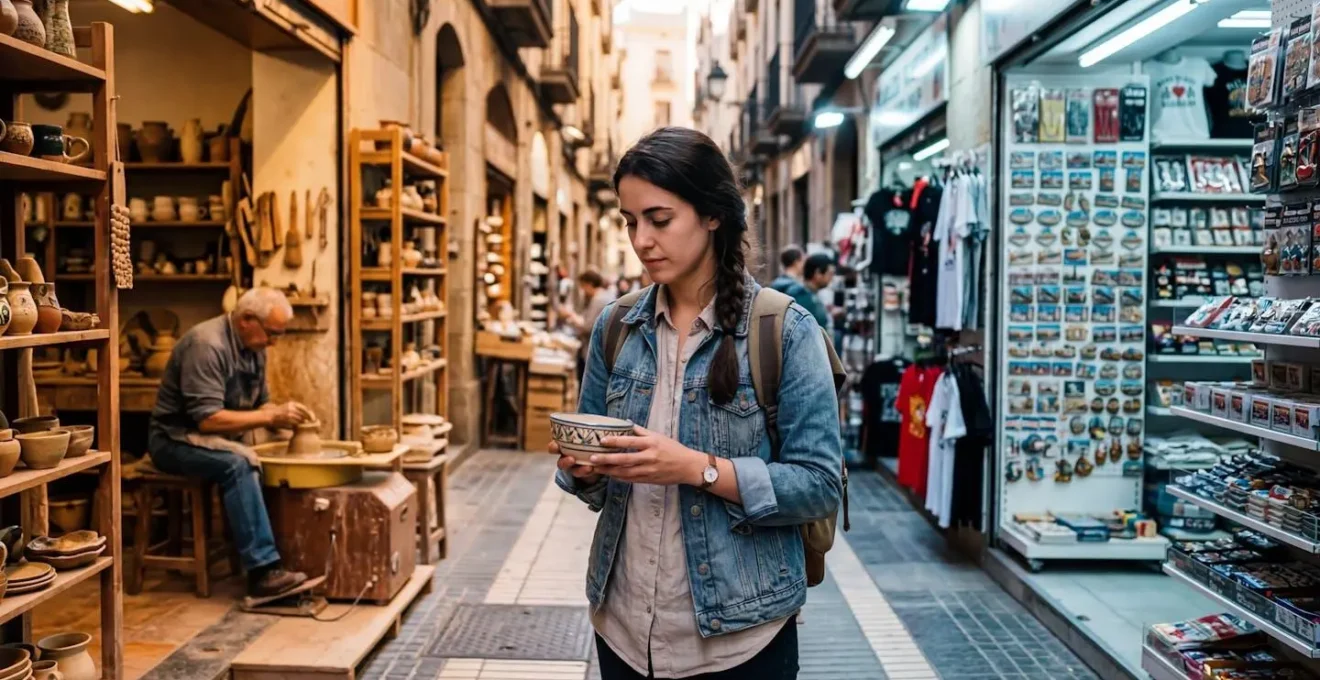
The image is a classic one: a vibrant street market, stalls piled high with colourful trinkets, and a friendly vendor eager to make a sale. Buying directly from them feels like the most direct way to support the local economy. However, this is often the first and most convincing tourist trap. The hidden reality is that many of these vendors are the final link in a long supply chain that begins in factories overseas. As research from the Association of Caribbean States reveals, the majority of souvenirs in many vendor stalls are sourced from foreign nations, completely bypassing the local craftspeople they are meant to represent.
This flood of cheap, mass-produced goods creates a devastating price war that genuine local artisans cannot win. Their handcrafted items, which take time, skill, and locally sourced materials, are undercut by factory-made replicas. To perform an “authenticity audit” on a souvenir, you must become a tactile investigator. Look for imperfections that signal handmade quality, ask direct questions about who made the item and where, and be wary of anything that looks too perfect or generic.
A truly local product tells a story through its materials and design. Instead of street-side stalls with suspiciously uniform inventory, seek out artisan workshops, co-operatives, or galleries where you can often see the work being created. While a street vendor in Jakarta selling traditional snacks from locally-sourced ingredients genuinely supports the community’s agricultural sector, a vendor selling identical “tribal” masks in three different countries is a clear red flag. Your purchasing power is a tool; aim it at uniqueness and verifiable local origin, not just convenience.
How to Verify the Ethical Credentials of a Heritage Tour Operator?
Hiring a guide or joining a tour is one of the best ways to gain deeper insight into a heritage site. But the choice of operator determines whether your money supports community stewardship or contributes to “economic leakage.” A flashy website and a “we love locals” slogan mean nothing without proof. Your role as an auditor is to look past the marketing and scrutinize the operator’s structure and practices. The first question is always: who owns the company? A locally-owned and operated business is far more likely to retain profits within the community.
Next, investigate their employment practices. Do they employ local guides, but also local managers, accountants, and administrators? Or are locals only in low-wage, customer-facing roles while management is foreign? An ethical operator invests in capacity building, training local people for leadership positions. Check their website for a mission statement, transparency reports, or certifications from recognised sustainable tourism bodies. Look for long-term partnerships with community projects that go beyond simple donations.
As the Center for Responsible Travel notes, the goal is to leave more money in the pockets of locals, which supports a unique “sense of place.” This happens when you choose operators who are deeply embedded in the local fabric. Ask them directly: “What percentage of my tour fee stays in the local community?” A transparent, ethical operator will have a ready and confident answer. An operator who is evasive or can’t answer is a major red flag. This simple question is one of your most powerful auditing tools, cutting straight to the heart of their business model.
UNESCO Sites vs Unlisted Ruins: Which Needs Your £20 Ticket More?
The allure of a UNESCO World Heritage site is undeniable. These are the crown jewels of global culture, and visiting them feels like a pilgrimage. However, your £20 entrance fee has a vastly different impact depending on where you spend it. The “authenticity audit” here is not about the site itself, but about the true needs of its conservation. Many iconic UNESCO sites, particularly in popular tourist regions, are suffering from overtourism. They are not struggling for funds but for crowd management. Your visit, however well-intentioned, adds to the physical strain on the monument and the surrounding community.
Conversely, countless unlisted, lesser-known heritage sites are crumbling from neglect. They receive little to no government funding and are entirely dependent on the trickle of visitors they get. Here, your entrance fee isn’t just a drop in an ocean of revenue; it might be the only money they receive that week to pay for urgent repairs or a caretaker’s salary. The dilemma is clear: do you contribute to a system groaning under its own weight, or do you become a lifeline for a site at risk of disappearing forever? While funding is a challenge everywhere, analysis shows that in Europe insufficient funding is a key issue, whereas overtourism significantly impacts sites in Latin America and the Caribbean.
This decision is clarified in the following comparison, based on data from recent sustainability studies.
| Aspect | UNESCO World Heritage Sites | Unlisted Heritage Sites |
|---|---|---|
| Visitor Numbers | High (millions annually) | Low to moderate |
| Funding Sources | Government, international aid, tourism revenue | Limited local funding, ticket sales |
| Infrastructure | Well-developed visitor facilities | Basic or minimal facilities |
| Conservation Budget | Substantial but stretched thin | Minimal, often critical |
| Impact of Your Visit | Contributes to crowd management | Directly funds preservation |
Choosing to visit an unlisted site is an active form of preservation. It requires more research and effort, but the return on your “investment” is exponentially higher. You are not just a tourist; you are a patron of cultural heritage.
The Volunteering Trap That Exploits Vulnerable Communities
“Voluntourism” is marketed as the pinnacle of ethical travel: giving your time and skills to help those in need. Yet, it is one of the most insidious traps, often creating dependency, taking jobs from locals, and treating communities as a backdrop for a traveller’s personal growth story. An organisation that charges you thousands of pounds to paint a school for a week is not a charity; it’s a business selling an experience. A true auditor must look beyond the emotional appeal and assess the project’s actual, long-term impact.
The first critical question is: does your presence displace a local worker? If you are doing unskilled labour like construction or painting, you are almost certainly taking a paid job away from a local person who needs it more. Ethical volunteering focuses on skill transfer, not labour. It involves a volunteer with specific, professional expertise (like a doctor, engineer, or grant writer) filling a clearly identified skills gap that cannot be met locally. The goal should always be to make the volunteer’s role redundant over time by training local staff.
Furthermore, you must audit the community’s involvement. Was the project requested by the community, or was it imposed by the foreign organisation? Do community members hold leadership positions and have decision-making power? Many voluntourism projects are designed for the volunteer’s satisfaction, not the community’s needs, leading to a cycle of dependency. Before signing up, use a rigorous checklist to vet the organisation and ensure you are not inadvertently part of the problem.
Your Action Plan: The Ethical Volunteering Audit
- Skills Match: Do my professional skills match a genuine community need that locals cannot currently fulfil?
- Local Leadership: Does the organisation actively employ, train, and promote local staff into leadership and management roles?
- Job Displacement: Does my unpaid work take a potential paid job away from a local resident?
- Long-Term Strategy: Does the organisation have a clear, sustainable, long-term development strategy beyond the presence of volunteers?
- Capacity Building Focus: Is the program’s primary goal to build local capacity and independence, rather than creating reliance on foreign help?
When to Visit Historical Monuments to Participate in Authentic Rituals?
Witnessing a living ritual at a historical site—a procession, a local festival, a quiet offering—can be a profound travel experience. But there’s a fine line between respectful observation and intrusive consumption. The key to navigating this is understanding the difference between a performance and a practice. A performance is scheduled, ticketed, and designed for an audience. A practice is part of the community’s organic life; it would happen whether tourists were there or not. Staged authenticity often involves turning a practice into a performance for profit.
The auditor’s approach is to seek the practice, not the performance. This rarely happens by chance. It requires patience and a shift in your travel style. Instead of a fleeting one-day visit, consider a longer stay in one place. Hire a local guide for several days, stay in a family-run homestay, and build genuine relationships. Authentic invitations often arise from these deeper connections, not from a tour brochure. As the National Trust for Historic Preservation defines it, heritage tourism is about experiencing activities that “authentically represent the stories and people of the past and present.” A scheduled fire-dance for tourists doesn’t fit this; a local family inviting you to observe a private ceremony does.
Timing your visit is also crucial. Research the local calendar for genuine festivals and religious holidays, not events manufactured for tourism season. When you do find yourself in the presence of an authentic ritual, your most respectful role is that of a quiet, unobtrusive witness. Ask for permission before taking any photos, dress conservatively, and stay on the periphery. The goal is to observe without influencing the event. Trying to “participate” can be a form of intrusion, diluting the very authenticity you travelled so far to find. The experience is not about you; it’s about the culture you are privileged to witness.
Community-Led Tours vs Foreign Agencies: Who Really Gets Your Money?
The money trail is never clearer than when booking a tour. You might choose an operator because it has a local guide, but the agency behind them could be a multinational corporation based in another continent. A significant portion of your payment is immediately siphoned off as “economic leakage.” A major culprit is the reliance on large Online Travel Agencies (OTAs). While convenient, these platforms take substantial commissions from the tour operator. When over 53.5% of tourism bookings go through these channels, it means billions of pounds are extracted from local economies before a single guide is paid.
Auditing the money trail means booking as directly as possible. Do the research to find tour operators that are 100% locally owned and operated. This may require digging deeper than the first page of Google, using local blogs, or getting recommendations on the ground. A community-led enterprise is not just owned by a local; it is often a cooperative or social enterprise where profits are reinvested into community projects, such as education, healthcare, or conservation.
These organisations are often smaller and have less-polished marketing, but their impact is exponentially greater. They offer a more intimate and authentic experience because their guides are not just employees; they are stakeholders in their own culture. When you book with them, you are not buying a product; you are investing in a community’s self-determination. Always ask: “Can I book with you directly?” By cutting out the middleman, you ensure that the maximum amount of your money stays where it belongs: with the people who are the custodians of the heritage you’ve come to see.
Key Takeaways
- Audit the Money Trail: The most critical ethical action is to investigate who ultimately profits from your spending, from tour operators to souvenir shops.
- Prioritise Direct Booking: Avoid large online travel agencies when possible and book directly with locally-owned businesses to prevent “economic leakage.”
- Distinguish Practice from Performance: Seek out authentic cultural experiences that are part of community life, not events staged specifically for tourists.
The Souvenir Purchasing Mistake That Fuels the Illegal Shell Trade
Beyond the trap of mass-produced fakes lies a more dangerous souvenir mistake: purchasing items that destroy the very environment you came to admire. Polished shells, intricate coral jewellery, and preserved seahorses might look beautiful on a market stall, but they are often the product of an illegal and destructive trade. Removing shells from a beach on a mass scale disrupts ecosystems, as they provide homes for organisms and break down into sand over time. Harvesting live coral reefs for souvenirs is even more devastating, destroying centuries of growth for a momentary trinket.
Your “authenticity audit” for souvenirs must therefore include an ecological dimension. Before buying any item made from a natural material, you must ask a series of critical questions. Is this resource irreplaceable? Is it legal to harvest and export this material in this country? What is the environmental cost of its removal? Often, the most beautiful items are the most destructive. Many countries have strict laws against the trade of wildlife products, including certain shells and coral, and ignorance is not an excuse when facing heavy fines or confiscation at customs.
The ethical alternative is to choose souvenirs that celebrate culture without depleting natural resources. Opt for items handcrafted by local artists from sustainable materials like recycled goods, cultivated wood, or woven plant fibres. These purchases support artistic skill and cultural heritage, not environmental destruction. The growing trend of sustainable shopping practices in tourism shows that more travellers are making this conscious choice. By refusing to buy products that fuel the illegal wildlife trade, you send a powerful market signal that a destination’s living ecosystem is more valuable than a dead souvenir.
How to Engage With Indigenous Customs Respectfully Without Being Intrusive?
After auditing the money trail, verifying operators, and choosing sustainable souvenirs, you arrive at the heart of ethical travel: direct, respectful human interaction. Engaging with indigenous customs is not a transaction; it is a privilege. The final and most important audit is of your own behaviour. As the organization Be Humanitarian puts it, “When we travel ethically, we engage with local communities and learn about their customs and heritage. By doing so, we contribute to the preservation of these vital aspects of the world’s cultural diversity.” This contribution, however, depends entirely on your approach.
One of the fundamental aspects of ethical travel is the preservation of culture and heritage. Every corner of the world has a unique cultural identity, shaped by its history, traditions, and local wisdom. By engaging with local communities, we contribute to the preservation of these vital aspects of the world’s cultural diversity.
– Be Humanitarian, The Value of Ethical Travel
The foundation of respectful engagement is humility. Acknowledge that you are a guest and an outsider. Do not assume your own cultural norms are universal. The best way to learn is by listening, not by talking. Hire a local guide who can act as a cultural bridge, explaining nuances and helping you avoid unintentional offence. Always ask for permission before taking photographs of people, and accept a “no” with grace. A person’s portrait is not a souvenir you are entitled to take.
True engagement is about showing genuine interest in people’s lives beyond their “cultural” roles. Ask about their families, their work, their hopes for the future—not just the meaning of their traditional dress. Support their communities in the ways they deem important, which often means supporting local businesses, schools, or conservation projects they themselves run. Ultimately, the most respectful engagement is one where you seek to learn rather than to experience, to give rather than to take, and to be a quiet witness rather than the centre of the story.
By adopting this auditor’s mindset, you transform your role from a passive consumer to an active and conscious partner in cultural preservation. The next step is to apply this critical framework to the planning of your next journey, ensuring every pound you spend is a vote for authentic, sustainable, and respectful tourism.
Frequently Asked Questions about Authentic Cultural Tourism
How can I tell the difference between a performance and an authentic practice?
Authentic practices are often spontaneous, personal, and not designed for spectators. If it’s scheduled and ticketed specifically for tourists, it’s likely a performance. Real practices are part of the organic rhythm of community life.
What’s the best way to witness authentic rituals respectfully?
Build relationships through extended stays, hire local guides for multiple days, or stay in homestays. Genuine invitations often come from these deeper connections rather than from a tourist brochure. Patience and genuine interest are key.
Should I try to participate in local rituals?
The most respectful role is often that of a quiet, unobtrusive witness. Attempting to participate without a specific and sincere invitation can be intrusive and dilute the authenticity you seek. Observe, absorb, and appreciate from the periphery.