In summary:
- The frustration with “staged authenticity” in travel is common, but finding genuine experiences isn’t about luck; it’s a skill.
- True immersion comes from learning to decode the subtle “semiotic cues” of a place—the signs that distinguish a local cultural ecosystem from a performance for tourists.
- This involves analysing economic drivers (who is the business for?), understanding timing (when do locals use this space?), and vetting operators for true community connection.
- By shifting from a passive consumer to an active observer, you can bypass the traps and connect with the real culture of a destination.
There’s a specific kind of disappointment familiar to the culturally curious traveller. It’s the feeling you get midway through a “traditional” dinner show, watching dancers perform a routine for the fifth time that night, when you realise you’re not a guest; you’re just an audience member in a meticulously staged production. You’ve been sold an image of authenticity, but the experience feels hollow, a packaged good designed for mass consumption. The common advice—”get lost in the city,” “talk to locals”—feels inadequate, offering vague romanticism instead of a practical strategy.
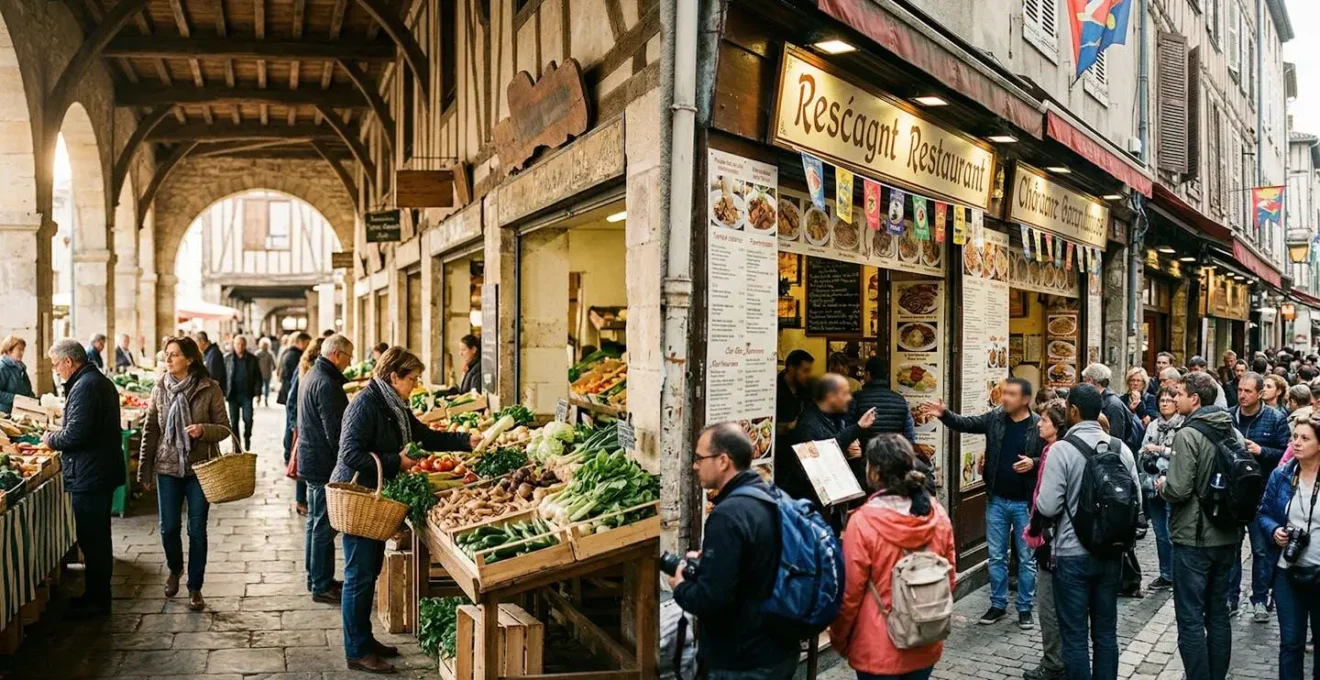
These platitudes fail because they treat authentic encounters as a matter of chance. They overlook the fact that the tourist industry has become incredibly adept at manufacturing “staged authenticity,” creating convincing replicas of cultural life that are easier to sell and control than the real thing. To the untrained eye, the bustling restaurant with a charming host outside looks like the heart of the action, when in reality, it’s often the epicentre of a tourist trap. The challenge isn’t just to avoid the obvious traps, but to see through the convincing fakes.
But what if the key wasn’t to wander aimlessly hoping for a lucky break, but to develop a new skill? The skill of a cultural anthropologist: learning to read the environment for its semiotic cues. This guide is built on that premise. It’s not a list of “hidden gems,” which are often just the next wave of tourist traps. Instead, it’s a framework for decoding the signs, symbols, and systems of a place. We will explore the economic anatomy of a tourist trap, the temporal patterns of local life, and the ethical markers of genuine cultural exchange. By learning to see the difference between a place that serves a community and a place that services tourists, you can systematically move beyond the facade and find the meaningful interactions you travel for.
This article provides a structured approach to help you distinguish genuine cultural ecosystems from their staged replicas. The following sections break down the key signals and strategies needed to navigate the modern travel landscape and find truly authentic experiences.
Summary: A Guide to Uncovering Genuine Travel Experiences
- Why Restaurants With Staff Touting Outside Are Always Overpriced Tourist Traps?
- How to Uncover Genuine Neighbourhood Festivals Unlisted on TripAdvisor?
- Airbnb Experiences vs Free Walking Tours: Which Offers Deeper Local Insight?
- The Local Guide Scam That Drags You Into High-Pressure Carpet Shops
- When Should You Visit the Local Market to See Real Traders Instead of Souvenir Stalls?
- How to Verify the Ethical Credentials of a Heritage Tour Operator?
- Why Large Hotel Chains Isolate You From Authentic Local Life?
- How to Support Authentic Cultural Heritage Sites Without Funding Tourist Traps?
Why Restaurants With Staff Touting Outside Are Always Overpriced Tourist Traps?
The friendly face at the restaurant door, menu in hand, isn’t a sign of hospitality; it’s a critical semiotic cue. This practice, known as touting, is a clear signal that the establishment’s business model is based on capturing a transient, uninformed tourist flow rather than cultivating a loyal local clientele. Locals don’t need to be coaxed into a restaurant they already know and trust. This aggressive marketing is necessary to overcome a fundamental weakness: the food, service, or value is not good enough to generate repeat business or positive word-of-mouth. In fact, research from travel experts shows that tourist-focused restaurants often charge 40-60% more than authentic local establishments for comparable dishes.
This economic reality leads to a cascade of other red flags. To appeal to a broad, international audience, menus are often laminated, feature glossy photos, and are translated into five or more languages—a sure sign they are not catering to a specific local palate. The food itself is often standardized and relies on frozen ingredients to manage the unpredictable flow of tourist crowds. An authentic local restaurant, by contrast, operates on a different rhythm, often closing between lunch and dinner services because their clientele eats at specific, culturally determined times. The absence of this break is a tell-tale sign of a tourist-centric operation.
The One-Block Rule Success Strategy
Travel expert Amanda Lee demonstrates the effectiveness of the ‘one-block rule’: In Paris, skip the touristy cafes near the Eiffel Tower and walk just a few blocks into a residential area for authentic dining at better prices. Similarly, in Rome, bypass the overpriced restaurants by the Colosseum to find a local trattoria where prices are lower and the food is more authentic. This simple act of putting one or two streets between you and a major landmark is often all it takes to escape the gravitational pull of the tourist economy and find a genuine cultural ecosystem.
Spotting these traps is a matter of quick ‘economic triage’. Look for these warning signs:
- Menus printed in 5+ languages or featuring glossy pictures.
- Aggressive staff outside trying to lure you in.
- A location directly on a main tourist square or thoroughfare.
- An absence of local customers during peak local dining hours.
- Staying open all day without closing between lunch and dinner.
How to Uncover Genuine Neighbourhood Festivals Unlisted on TripAdvisor?
The most memorable travel experiences are often the ones you can’t plan for from a mainstream travel guide: the local neighbourhood saint’s day festival, the community harvest celebration, or a spontaneous street market. These events are the lifeblood of a community’s culture, yet they remain invisible to platforms like TripAdvisor because they aren’t created for tourists. Uncovering them requires a shift in mindset from a consumer of experiences to a “digital anthropologist,” using online tools to listen to local conversations rather than tourist-facing broadcasts.
Before your trip, your research should focus on the digital “third places” where locals gather. This means going beyond Google searches for “[City] events.” Instead, search on Facebook Events using translated, specific keywords like “mercato [Neighbourhood Name]” or “festa di quartiere.” Follow local artists, community centres, and cultural organisations on social media. Join city-specific Reddit communities (e.g., r/askTOKYO) and local Facebook groups, where residents share insider information. These channels are the modern-day equivalent of the village square. Once you arrive, the same principle applies offline. Look for handwritten posters on lampposts, in the windows of local bakeries, or on university notice boards. These are the advertisements for events meant for the community, not for you, which is precisely why you should go.
This method allows you to discover events rooted in the living heritage of a place. It’s not about crashing a private party, but about respectfully observing the public expression of community life that happens outside the monetized tourist sphere. You’re more likely to find authentic food, traditional music, and genuine interactions at a small neighbourhood festival celebrating a local saint than at a large, ticketed “cultural show” promoted to tourists.
Airbnb Experiences vs Free Walking Tours: Which Offers Deeper Local Insight?
In the quest for local insight, travellers are often faced with a choice between a paid, intimate Airbnb Experience and a “free” (tips-based) walking tour. While both promise a “local’s perspective,” they operate on fundamentally different models that drastically shape the authenticity and depth of the experience. A free walking tour, by its nature, is a volume-based business. Guides, who often work on commission from tips, need to cater to large groups (often 20-30 people), which forces them to stick to a rigid script and a well-trodden route. The experience is a broad, historical overview, and the economic model can create pressure to funnel the group towards affiliated shops or restaurants.
Airbnb Experiences, in contrast, are structured around a small-group, passion-driven model. The host is typically not a professional tour guide but an individual sharing a specific skill or perspective, from a cooking class in their home to a photography walk through their neighbourhood. The fixed, upfront cost removes the pressure of tipping and allows the host to focus on a quality interaction rather than crowd management. This smaller group size allows for more flexibility, genuine conversation, and the ability to go “off-script.” While not all Airbnb Experiences are created equal, their inherent structure offers a greater potential for a deep dive into a specific facet of local culture, moving beyond a superficial overview.
This table breaks down the core differences, helping you perform an ‘economic triage’ on the experience itself.
| Criteria | Airbnb Experiences | Free Walking Tours |
|---|---|---|
| Group Size | Small (2-10 people) | Large (15-30+ people) |
| Customization Potential | High – can go off-script | Low – fixed route and timing |
| Host Background | Passionate individuals with unique skills | Professional guides, often commission-based |
| Cost Structure | Fixed upfront cost | Tips-based (can be pressure) |
| Local Authenticity | Often genuine local perspectives | May funnel to commission shops |
| Time Flexibility | More flexible, intimate pace | Strict schedule, time constraints |
| Depth of Experience | Deep dive into specific craft/activity | Broad overview of area |
Ultimately, neither option is a guaranteed path to authenticity, but their structures point in different directions. As Travel Research Analysis notes in the Global TravelWide Guide to Authentic Experiences, there’s a powerful third option:
The most authentic experience is often a self-guided tour using curated resources made by locals, such as specialized blogs, podcasts, or paid audio guides from local historians, bypassing the group dynamic entirely.
– Travel Research Analysis, Global TravelWide Guide to Authentic Experiences
The Local Guide Scam That Drags You Into High-Pressure Carpet Shops
One of the most pervasive scams targeting well-intentioned travellers is the “friendly local” who offers to show you something special—their uncle’s shop, a student art cooperative, or a special tea ceremony—only to lead you into a high-pressure sales environment. This scam preys on the traveller’s desire for a genuine connection and turns it into a commission-based trap. The “guide” is often not a guide at all but a tout who earns a percentage of whatever you can be pressured into buying. The most infamous variant is the carpet shop scam, common in parts of the Middle East and North Africa, but the template is replicated globally with leather goods, jewellery, or other high-margin items.
The anatomy of the scam is consistent. It begins with a disarmingly friendly approach, often offering help or a piece of local advice. This builds initial trust. The next step is an invitation to a “non-commercial” space, which creates the illusion of a personal, authentic encounter. Once inside, the dynamic shifts. You are offered tea, shown great hospitality, and then the sales pitch begins. The pressure is layered on subtly at first, then more intensely, using guilt, obligation, and persistence to wear down your defences. Leaving can feel incredibly awkward, which is exactly what the sellers count on.
Anatomy of the Carpet Shop Scam
A travel writer’s experience illustrates the pattern perfectly: “Be wary of overly enthusiastic hawkers offering free samples or cultural experiences. These often lead to overpriced purchases or pressured sales tactics. One time, many years ago, I made the mistake of going to a free breakfast in Mexico with a sales pitch afterward.” This shows how the scam progresses from a seemingly harmless offer to a sales pitch, a clear example of staged authenticity designed for economic extraction.
Recognising the setup is the first line of defence. The most crucial rule is to never follow a stranger who approaches you on the street to their “family” or “friend’s” shop. If you find yourself in a high-pressure situation, having a pre-planned exit strategy is vital. Your politeness is their weapon, so you need to be firm, clear, and ready to walk away.
- Use a polite but firm phrase: “Thank you for the offer, but we have a reservation we can’t be late for.”
- Employ the “broken record” technique: calmly repeat “No, thank you” while physically moving towards the exit.
- Create a false time constraint: “We need to meet our tour group in 5 minutes.”
- If pressure escalates, head towards a public space like a hotel lobby or a tourist police station.
When Should You Visit the Local Market to See Real Traders Instead of Souvenir Stalls?
Local markets are often touted as the pulsating heart of a city, but that heart beats to a specific rhythm. Arrive at the wrong time, and you’ll find a space transformed for tourists, with authentic produce stalls replaced by souvenir vendors and local shoppers crowded out by tour groups. The key to experiencing a market as a living, breathing part of the cultural ecosystem lies in understanding its daily and weekly cycles. Timing is everything. The most authentic market experience happens when it is most functional for the people it is meant to serve: the locals.
The golden hours are at the very beginning and very end of the day. Visiting between 6 AM and 8 AM allows you to witness the “Rule of Dawn,” when local residents and restaurateurs do their serious shopping for fresh produce. This is when the market is at its most functional and least performative. Indeed, research on local market patterns reveals that markets experience 70% fewer tourists during these early morning hours. This is your chance to see the real traders, the best produce, and the genuine commercial ballet of the city waking up. Similarly, the hour before closing—the “Rule of Dusk”—offers another window into local life, as shoppers arrive to hunt for end-of-day bargains.
The day of the week also matters. Weekday markets are generally more functional and food-focused, whereas weekend markets, especially in popular cities, are often designed with tourists in mind, featuring more crafts and prepared foods at inflated prices. To find the authentic core, follow the locals. Look for the non-refrigerated sections selling grains, eggs, and household goods. Spend thirty minutes observing the flow from a nearby coffee stall before diving in. This observational pause is a key anthropological tool, allowing you to understand the market’s social dynamics before you participate in them.
How to Verify the Ethical Credentials of a Heritage Tour Operator?
Choosing a tour operator, especially for visiting sensitive heritage sites or communities, is one of the most significant ethical decisions a traveller can make. Your choice directly funds a particular vision of tourism. A responsible operator acts as a bridge, facilitating respectful interaction and ensuring that tourism money supports community preservation. A predatory one can exploit culture, commodify heritage, and divert profits away from the people who maintain it. Verifying an operator’s ethical credentials is not just about feeling good; it’s about ensuring your visit contributes positively to the place you’ve come to admire.
Transparency is the hallmark of an ethical operator. A company that is genuinely committed to sustainable and community-focused tourism will be proud to show you how they operate. As the Heritage Tourism Assessment states, a key principle is to follow the money:
A truly ethical operator will be transparent about where the money goes. Look for statements on their site about community projects they fund, conservation efforts they support, or a clear breakdown of tour costs.
– Heritage Tourism Assessment, Sustainable Travel Guide
This transparency should extend to their staffing. Are the guides from the local community, offering a lived-in perspective, or are they expats reciting a script? Do they hold official, government-issued guide licenses? These details are not minor; they speak to the operator’s commitment to local employment and authentic representation. Look for certifications from recognized bodies like B Corp or the Global Sustainable Tourism Council (GSTC), but also do your own due diligence by reading reviews that specifically mention the guide’s cultural knowledge and the company’s impact on the community.
Action Plan: Heritage Tour Operator Verification Checklist
- Certifications: Search for official endorsements from recognized bodies like B Corp, GSTC, or local tourism boards on their website.
- Local Staffing: Verify if guides and staff are from the local community. Check their “About Us” page or reviews for mentions of local employment.
- Financial Transparency: Look for a clear statement on their website explaining where tour fees go. Do they mention funding specific community projects or conservation efforts?
- Guide Credentials: Read reviews that comment on the guide’s depth of cultural knowledge, respect for the site, and official qualifications (e.g., government-issued badges).
- Community Programs: Ask directly about their local employment, training programs, or any partnerships they have with local non-profits or community enterprises.
Why Large Hotel Chains Isolate You From Authentic Local Life?
Your choice of accommodation is the anchor for your entire trip, and large, international hotel chains are often designed to be anchors that keep you tethered to a self-contained, homogenized environment. These hotels create what is known as the “hotel bubble,” an ecosystem of convenience that actively discourages independent exploration. With their own restaurants, bars, tour desks, and gift shops, they provide a frictionless, predictable experience that is the very antithesis of authentic travel. The architecture and location are often part of this strategy, placing guests in tourist-heavy zones and creating a psychological barrier between the sterile comfort of the hotel and the unpredictable vibrancy of the real neighbourhood just outside.
This isolation is not accidental; it’s a core part of the business model. By keeping guests within the hotel’s ecosystem, the chain captures a greater share of their total travel budget. The concierge recommends affiliated restaurants, the tour desk sells pre-packaged excursions, and the bar offers a “safe” alternative to a local tavern. The result is a travel experience that could take place almost anywhere in the world, completely detached from the unique cultural fabric of the destination.
The Hotel Bubble Architecture Problem
Research highlights that hotels in tourist areas create self-contained bubbles, charging premium prices for standard services. In contrast, choosing a vacation rental or a small, locally-owned guesthouse in a residential neighbourhood forces you to engage with the local economy. It provides an authentic experience by compelling you to find your morning coffee, buy groceries at the local market, and discover neighbourhood restaurants, effectively bursting the bubble and fostering genuine, independent exploration.
Breaking out of this bubble requires a conscious effort from the moment you arrive. Your first 24 hours are critical. Instead of settling into the hotel, make it your immediate mission to establish anchor points in the surrounding neighbourhood. Find the nearest local café, the corner store, the public transport stop, and a resident-frequented grocery store. Walk the surrounding residential streets to get a feel for the area’s rhythm. Ask a shopkeeper—not the hotel concierge—for their favourite nearby restaurant. This simple act of creating a mental map outside the hotel’s walls is the first and most important step toward a more integrated and authentic stay.
Key takeaways
- Authenticity is a skill, not a discovery. It requires learning to read the economic and social cues of a place.
- Timing is a critical factor. Visiting markets, neighbourhoods, and even sites during off-peak hours or days offers a more genuine glimpse into local life.
- Your economic choices matter. Supporting small, local businesses, community-managed sites, and ethically-vetted operators directly contributes to cultural preservation.
How to Support Authentic Cultural Heritage Sites Without Funding Tourist Traps?
Supporting cultural heritage is not as simple as buying a ticket. The very act of visiting can contribute to the “Disneylandification” of a site if its management is driven by profit over preservation. Understanding the funding model of a heritage site is the final piece of the puzzle in becoming a truly responsible traveller. Different models create vastly different visitor experiences and have profound impacts on the long-term sustainability of the culture you wish to support. A for-profit, privately-owned site has a primary incentive to maximize ticket sales and merchandise revenue, which can lead to commercialization and a focus on entertainment over education.
In contrast, state-run sites, non-profit foundations, and community-managed initiatives often have mandates that prioritize preservation, research, and authentic interpretation. These are the organizations where your entrance fee is more likely to fund archaeological work, building maintenance, and fair wages for local staff. The experience at these sites is typically more educational and less performative. The most authentic interactions often come from community-managed sites, where your visit directly supports the people whose living heritage the site represents. Your choice of where to go and when is a powerful vote for the kind of tourism you believe in.
This comparative table helps to clarify the different incentives at play:
| Site Type | Funding Model | Impact on Preservation | Visitor Experience |
|---|---|---|---|
| State-run Sites | Government funded | Focus on preservation | Educational, authentic |
| Non-profit/Foundation | Donations & grants | Balance preservation/access | Mission-driven programs |
| For-profit Private | Ticket sales & merchandise | Profit over preservation | Often commercialized |
| Community-managed | Local support & modest fees | Living heritage focus | Most authentic interaction |
Beyond choosing the right type of site, your timing can also have a sustainable impact. As one report on heritage management notes, ” Visiting during the low season or on a weekday provides a more sustainable, year-round income stream for staff and reduces the strain of overtourism on the site’s infrastructure.” This small adjustment in your planning can make a significant difference, transforming your visit from a moment of consumption into an act of genuine support for cultural preservation.
By applying these anthropological observation skills—analyzing economic drivers, understanding social rhythms, and vetting operators—you transform your role from a passive tourist into an active, respectful participant. This approach not only helps you bypass the traps of staged authenticity but enriches your journey, creating connections that are both meaningful and memorable. Start your next journey not just as a visitor, but as a temporary local with the tools to see what lies beneath the surface.