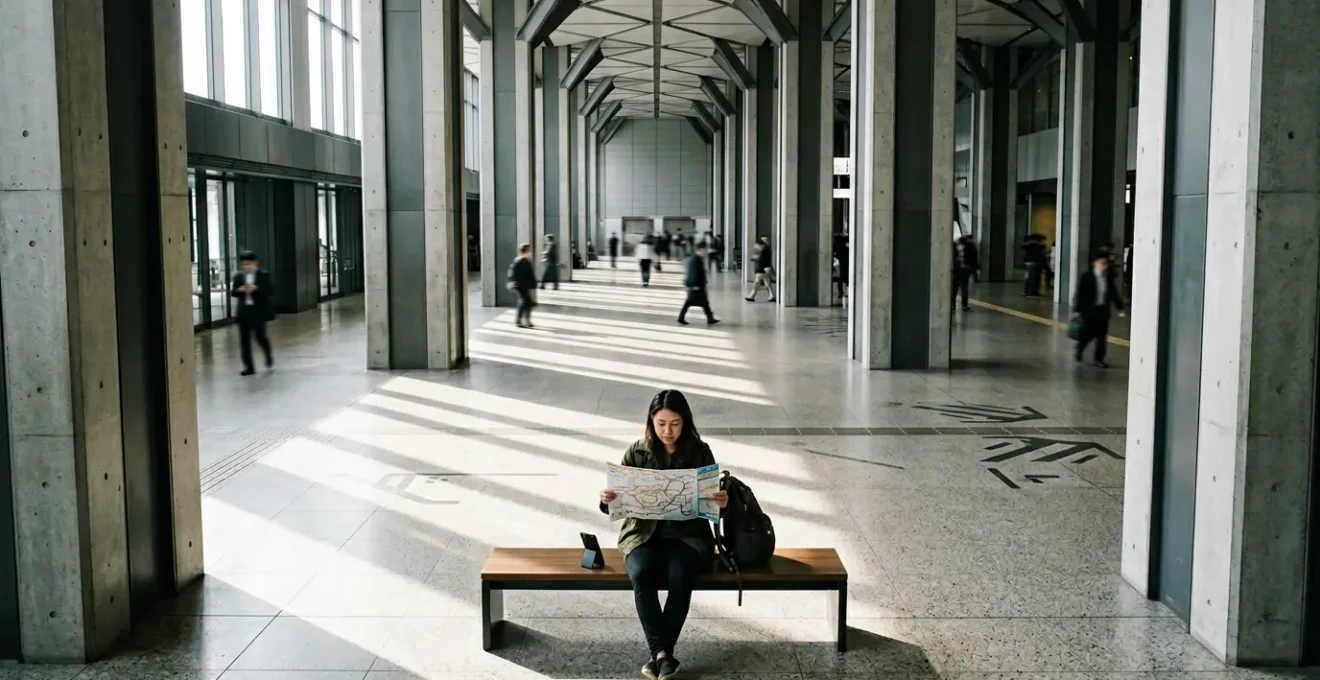
The secret to a successful Japan trip isn’t finding the ‘perfect’ online itinerary; it’s building a resilient travel system that prioritises your energy and sanity. Most guides focus on what to see, leading to rigid, exhausting schedules. This guide teaches you the logistical frameworks that travel consultants use—from energy budgeting to strategic accommodation booking—empowering you to design a deeply personal and flexible journey, saving you the agency fee and the stress of a plan that’s too fragile to survive reality.
The thought of planning a three-week trip to Japan is both exhilarating and utterly overwhelming. You’ve seen the pictures, you’ve dreamt of the food, and you’re a highly organised professional, perfectly capable of booking flights and hotels. Yet, the sheer scale of the logistics—fifteen stops, bullet trains, multiple cities, a completely different culture—can lead to severe decision fatigue. It’s tempting to throw your hands up and pay a bespoke travel agency £500 or more just to make the chaos stop.
Most online guides offer pre-canned itineraries or endless lists of “must-sees.” They encourage you to pack every hour, creating a fragile, colour-coded spreadsheet that shatters the moment a train is delayed or you discover a charming side-street you’d rather explore. But what if the key wasn’t a more detailed plan, but a better planning *system*? What if you could learn the principles travel consultants use to manage complexity, not just for Japan, but for any future trip?
This guide is designed to do just that. It’s not another rigid schedule. Instead, it’s a masterclass in building your own logistical framework. We will deconstruct the process, giving you the tools to make smart, strategic decisions that save you time, money, and most importantly, the stress that can ruin a once-in-a-lifetime experience. We’ll move from managing burnout to mastering transport, ensuring your plan is as resilient as it is remarkable.
Here, we will explore the core frameworks for structuring your own complex, multi-region Japanese adventure. This table of contents outlines the key principles we’ll cover to turn you into your own expert travel consultant.
Summary: How to Plan a 3-Week Japan Trip Like a Pro
- Why Over-Scheduling Every Hour Leads to Severe Traveller Burnout?
- How to Map Logistics Using Google My Maps for a 15-Stop Journey?
- DIY Planning vs Bespoke Agencies: Which Saves You More Stress?
- The Accommodation Booking Mistake That Ruins Your Bullet Train Schedule
- When Should You Lock Down Internal Transport Versus Keeping Things Flexible?
- Why Booking Separate Single Flights Costs You 40% More?
- Slow Travel vs Fast Paced Itineraries: Which Prevents Exhaustion?
- How to Link 3 Global Metropolitan Hubs Using Only 14 Days of Annual Leave?
Why Over-Scheduling Every Hour Leads to Severe Traveller Burnout?
The biggest mistake ambitious travellers make is treating their holiday plan like a project plan. Every minute is accounted for, every activity scheduled back-to-back. This approach, while seemingly efficient, is the fastest path to traveller burnout. It transforms moments of potential discovery into a stressful checklist of obligations. A recent 2023 study found that overly structured trips correlate with higher stress levels and lower overall trip satisfaction. The pressure to “do everything” negates the very purpose of the trip: to rest, explore, and enjoy.
Travel burnout is more than just feeling tired; it’s a state of mental and emotional exhaustion where even exciting activities feel like chores. It’s the cumulative effect of constant movement, planning, and adaptation without adequate downtime.
Travel burnout runs much deeper than fatigue and leaves you physically drained, mentally foggy, and emotionally detached. Activities you’d usually jump at suddenly feel like chores. It’s the continuous chaos of moving, planning, and adapting that takes its toll.
– Kassie Duggan, What is Travel Burnout?
The antidote is not less planning, but a different kind of planning: energy budgeting. Instead of scheduling by the hour, you plan by your mental and physical capacity. This means building a flexible framework with only one or two “logistical anchors” per day—a major temple visit, a restaurant reservation—and leaving the surrounding hours open for spontaneity. This system allows you to adapt to how you feel, whether that means an impromptu nap or discovering a hidden garden not on your original list. It’s the difference between seeing Japan and actually experiencing it.
How to Map Logistics Using Google My Maps for a 15-Stop Journey?
For a trip with the complexity of a 15-stop Japanese journey, a spreadsheet is a list, but a map is a story. Your most powerful free tool is Google My Maps, which allows you to build a visual, multi-layered logistical framework. This isn’t just about dropping pins on sights; it’s about creating a dynamic dashboard for your entire trip. You can create distinct, colour-coded layers for every category of information: one for accommodations, another for transport hubs, a third for must-see sights, and even one for food spots you’ve researched. This visual separation is the first step in taming the chaos.
The true power lies in embedding data directly into each pin. For a train station pin, don’t just add the name; include the specific train numbers, platform details, and departure times. For your hotel pins, add your confirmation number and, crucially, the hotel’s address in Japanese script—a lifesaver when showing it to a taxi driver. This turns the map from a simple picture into an interactive database. By using the distance-measuring tool, you can check if that “10-minute walk” from the station to your hotel is realistic after a long travel day with luggage. This system helps you identify geographical clusters of activities, allowing you to plan efficient days and eliminate the exhausting backtracking that plagues poorly planned trips.
This method transforms trip planning from an abstract exercise into a concrete, visual process. It allows you to see the entire flow of your journey, spot potential bottlenecks, and make informed decisions about your route. You are no longer just listing places; you are designing a logistical masterpiece. Building this master map is a core task that helps you visualize your entire itinerary and gain a deep understanding of your trip’s geography and timing.
DIY Planning vs Bespoke Agencies: Which Saves You More Stress?
The £500 question is whether to hire a bespoke agency or go it alone. The answer depends entirely on what you value more: upfront time or in-trip control. An agency sells you peace of mind during the planning phase, condensing what could be 40+ hours of intense research into a few consultation calls. They provide expert insights and a pre-vetted plan. However, this comes at the cost of flexibility and budget control. You are often locked into their partner hotels and pre-set packages, losing the ability to make a trip that is 100% personalized to your quirks and interests.
DIY planning, on the other hand, is front-loaded with stress. The research can feel like a second job. But the payoff is immense: a trip that is perfectly tailored to your budget and tastes, and a deep understanding of your own itinerary that makes you more resilient when things go wrong. Because you built the system, you know exactly which parts are critical and which are flexible. This knowledge is invaluable when you need to make a quick decision on the ground. The initial planning stress is replaced by a sense of calm and control during the trip itself.
The following table breaks down the core trade-offs, based on analysis from veteran travelers. As this cost-benefit analysis from travel experts shows, the “best” choice is highly personal.
| Factor | DIY Planning | Agency (£500+) |
|---|---|---|
| Time Investment | 40+ hours research | 2-3 consultation hours |
| Cost Control | Full budget flexibility | Pre-set packages |
| Customization | 100% personalized | Limited options |
| Local Knowledge | Research dependent | Expert insights |
| Stress Level | High initially, low during trip | Low initially, uncertainty during |
| Problem Resolution | Self-managed | Agency support |
Ultimately, this guide operates on the principle that the confidence gained from DIY planning is worth the initial effort. A key piece of insider knowledge, for example, concerns the Japan Rail Pass.
While the JR Pass is not as cheap as it once was, if you’re bouncing around the country for a week or more, the pass is a must because single high-speed rail tickets are very expensive. Just be sure to get one BEFORE you go as you cannot purchase them on arrival.
– Nomadic Matt, The Ultimate Japan Itinerary for 2026
This is exactly the kind of critical information that empowers a DIY planner and builds a robust travel framework, turning potential stress into a feeling of savvy preparation.
The Accommodation Booking Mistake That Ruins Your Bullet Train Schedule
One of the most common and costly mistakes first-time planners make is booking a hotel that looks “central” on a map but is logistically inconvenient. In Japan, your hotel is not just a place to sleep; it is a logistical anchor. Choosing a hotel that is a 15-minute walk or a subway ride away from your main Shinkansen (bullet train) station can have a cascading negative effect on your entire itinerary. It means a stressful dash in the morning to catch an early train, wrestling with luggage on crowded local transport, and wasting precious time that could be spent exploring.
The professional traveller’s secret is to book accommodation based on proximity to the *correct* train station for your inter-city travel. For travel days, prioritising a business hotel directly connected or adjacent to a major Shinkansen hub (like Tokyo Station or Shin-Osaka) is a non-negotiable. These hotels are designed for transit. They understand the flow of travellers, offer efficient check-in/out, and most importantly, are well-versed in Japan’s incredible luggage-forwarding service, Takkyubin. You can send your main suitcase ahead to your next destination for a small fee and travel with just a small overnight bag, turning a stressful travel day into a lightweight, enjoyable experience.
This strategic choice saves you hours of transit time and immense physical and mental strain. It’s the difference between arriving in a new city flustered and exhausted, or stepping off the train refreshed and ready to explore. To ensure you make the right choice, a systematic approach is essential.
Your Station-Adjacent Hotel Booking Checklist
- Check proximity to the correct train station for your main travel route, not just any local station.
- Verify the hotel can receive and send luggage via the Takkyubin (luggage forwarding) service.
- Confirm 24/7 reception or flexible check-in times to accommodate late arrivals or early departures.
- When booking, ask if they offer discounts for rail pass holders, as some do, though it often requires a direct call.
- Inquire directly with JR Hotels by phone, as discounts for Japan Rail Pass holders may not be advertised online or available on all dates.
- Prioritise booking business hotels near major stations specifically for your transit days between cities.
When Should You Lock Down Internal Transport Versus Keeping Things Flexible?
Japan’s transport system is a marvel of efficiency, but it operates on a complex set of rules that can be confusing for visitors. The key question is not just *how* to get from A to B, but *when* to commit to a ticket. The answer depends entirely on the type of transport you are using. For a stress-free journey, you need a clear framework for what to book in advance versus what to leave flexible.
As a general principle, the faster and more long-distance the train, the more critical advance booking becomes, especially during peak seasons (like cherry blossom season or Golden Week). The premium Shinkansen services, like the Nozomi on the Tokaido line, have reserved and non-reserved cars. While you *can* try your luck in a non-reserved car, during busy periods this means standing for a 2-3 hour journey. For a trip of a lifetime, guaranteeing a seat is a small price to pay for comfort and certainty. Highway buses, a budget-friendly alternative, almost always require mandatory reservations.
Conversely, local and rapid JR lines within cities or on shorter regional routes, as well as all city subway systems, are designed for maximum flexibility. You cannot reserve seats on these trains. This is where your pre-paid IC card (like a Suica or Pasmo) becomes your best friend, allowing you to simply tap in and out without ever thinking about buying a ticket. Understanding this distinction is the core of a smart transport strategy. You create logistical anchors by booking your main long-distance travel, then build a flexible bubble of local travel around them.
This official guide from the Japan National Tourism Organization provides a clear overview of requirements. The table below synthesizes this information into a practical decision-making tool.
| Transport Type | Reservation Required | Flexibility | Peak Season Strategy |
|---|---|---|---|
| Shinkansen (Nozomi/Hayabusa) | Mandatory for reserved seats | Non-reserved cars available | Book 30 days ahead |
| Limited Express Trains | Highly recommended | Some unreserved cars | Book 2 weeks ahead |
| Highway Buses | Mandatory | No flexibility | Book upon arrival |
| Local/Rapid JR Lines | Not possible | Full flexibility | No booking needed |
| Subway Systems | Not possible | Full flexibility | IC card recommended |
Why Booking Separate Single Flights Costs You 40% More?
When planning your international travel to Japan, the default for most people is to search for a simple round-trip flight, for instance, London to Tokyo and back. However, for a multi-city itinerary, this is a classic beginner’s mistake that costs you both time and money. If your trip ends in Osaka, a return flight from Tokyo forces you to “backtrack”—to take a multi-hour, expensive Shinkansen ride back to your arrival city just to fly home. This is a wasted day and a significant unnecessary expense.
The solution is an “open-jaw” ticket, and it’s the single most effective flight booking strategy for a complex trip. Using a tool like Google Flights’ “Multi-city” search, you book a single ticket that flies you *into* one city (e.g., Tokyo) and *out of* another (e.g., Osaka). This creates a linear, efficient route through the country, eliminating the need to backtrack. While it might seem like this would be more expensive, it is often comparable in price to a standard return and saves you the cost and time of that final, stressful train journey.
The same logic applies to domestic travel, but with a warning. Low-Cost Carriers (LCCs) like Peach or Jetstar can seem temptingly cheap for connecting, say, Fukuoka to Sapporo. However, you must calculate the true cost. These airlines are notorious for extra fees. As travel guides often warn, budget airlines can add up to 40% on top of the base fare once you account for baggage, seat selection, and often, inconvenient airport locations that require expensive transfers. Always compare the final LCC cost and total travel time against the efficiency and comfort of the Shinkansen before booking.
Slow Travel vs Fast Paced Itineraries: Which Prevents Exhaustion?
A common trap for a three-week trip is trying to see the entire country. The allure of ticking off Tokyo, Kyoto, Hiroshima, Takayama, and Hokkaido is strong, but this “fast-paced” approach often leads to a trip experienced mostly through the window of a train. You spend more time in transit than in the destinations themselves. Every hotel change is a hidden time sink; research suggests that changing accommodations consumes an average of 4 hours when you factor in packing, checking out, travel to the station, the journey itself, and finding and checking into the new hotel. With 5-6 hotel changes, you can lose an entire day of your vacation just to logistics.
The alternative is a “slow travel” or “hub and spoke” philosophy. Instead of trying to see ten places superficially, you choose two or three main hubs (like Tokyo and Kyoto) and dedicate more time to each. You unpack once and stay for 5-7 nights, using these cities as a base for day trips. This dramatically reduces transit fatigue and allows for deeper immersion. You have the freedom to get lost, to revisit a favourite spot, or to spend an entire afternoon in a cafe without feeling the pressure of a looming train departure. This approach acknowledges that you cannot see everything, and instead prioritises the quality of the experience over the quantity of locations visited.
For a more relaxed Japan vacation, spend the whole week in Tokyo or Kyoto and take day trips. Or if you don’t mind rushing about, visit both major cities with an overnight stop on the way.
– Never Ending Voyage, Planning a Trip to Japan: DOs & DON’Ts (2026)
For a highly organised professional from the UK, whose time is their most valuable asset, the slow travel approach is often the more rewarding. It’s a conscious decision to trade a frantic checklist for a restorative and meaningful journey. It’s about creating a travel system that leaves you energized, not exhausted.
Key takeaways
- Build a flexible travel system, not just a rigid itinerary.
- Use Google My Maps with layers and embedded data as your central logistical dashboard.
- Book accommodation adjacent to your main Shinkansen station on travel days to save hours of stress.
- Employ an “open-jaw” flight strategy (e.g., into Tokyo, out of Osaka) to eliminate backtracking.
- Practice energy budgeting by planning only one major activity per day, leaving room for spontaneity.
How to Link 3 Global Metropolitan Hubs Using Only 14 Days of Annual Leave?
For many professionals, a full three-week trip is a luxury. The real challenge is often maximizing a standard two-week block of annual leave. With smart planning, it is entirely possible to experience the essence of Japan’s three great metropolitan hubs—Tokyo, Kyoto, and Osaka—by strategically using just 10-14 days off work. The key is ruthless efficiency and leveraging Japan’s incredible transport infrastructure to its fullest.
The first step is to book flights that maximise your time on the ground. Aim to depart on a Friday night to arrive in Japan on Saturday morning, and book your return flight for a Sunday evening. This schedule typically uses only 10 working days of leave but gives you 16 full days for your trip. Next, you must be disciplined with your time allocation. A minimum of 3-4 nights per hub is essential to avoid constant packing and unpacking. A good split could be 5 nights in Tokyo, 4 in Kyoto (with a day trip to Osaka), and a final night near your departure airport.
To make this work, you must become an early riser and a late traveller. Use the first Shinkansen of the day (around 6:00 AM) or the last one (departing near 11:00 PM) for your inter-city travel. This turns your transit time into something that happens while the sights are closed anyway. For the budget-conscious, an overnight bus like the Willer Express can connect cities while also saving you the cost of one night’s accommodation. While not as fast or comfortable as the bullet train, it’s a powerful tool for stretching a limited budget and schedule. This intensive approach requires a solid logistical framework but proves that an epic Japanese journey is achievable even with limited time.
Now that you are armed with the frameworks and decision-making systems of a professional travel consultant, you are ready to stop passively consuming itineraries and start actively designing your own. The process itself becomes part of the adventure. Begin by opening Google My Maps, create your first layer, and start building the journey that is truly yours.